
The Right to Forget
A reflection on emotional pain and active forgetfulness.

My closest friends already know, but you may not; Eternal Sunshine of the Spotless Mind is one of my favourite movies. The ability to willingly choose to delete parts of one’s life from one’s memory, a central plot of the movie, has always fascinated me. If you haven’t watched it and would like to, this is the section I advise you to stop reading, as I may spoil some things for you.
In the movie, we discover how, after the break-up of the relationship between Joel and Clementine, she decided to undergo a procedure to delete Joel from her memories. Devastated by this discovery, Joel decides to do the same. As we navigate the deleted memories of Clementine in Joel’s mind, we are able to see, from his perspective, both the issues that led to their relationship’s demise, and his underlying and everlasting feelings for her.
The movie demonstrates how these underlying feelings can remain in them, albeit without the interrelated memories. The character played by Kirsten Dunst, for example, who’d undergone several similar procedures, had an ‘inexplicable’ connection to the man she kept deleting her memories for; Joel and Clementine met soon after they had both undergone the procedure, and were immediately drawn to each other. Perhaps this is ‘the eternal sunshine’ included in the movie’s title: you may very well lose the memory, but not the underlying emotions. The movie ends with Joel and Clementine learning about their previous connection, what they’d both done, and despite it all, deciding to live yet another chapter of their lives together.
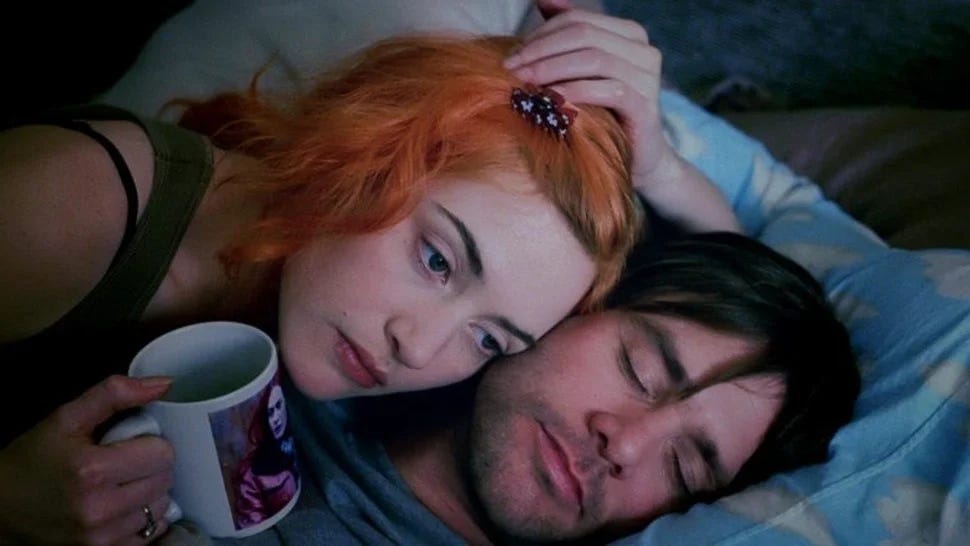
Now, this movie can spark a plethora of discussions. For instance, I remember thinking: their relationship is doomed to end the same way, because they don’t have the necessary information on each other to avoid similar mistakes; after all, none of them had changed, and feelings alone are not enough. Even if they wanted to, they lacked the ability to do so, given their memory loss. This is not a discussion on that (although do tell me if you have a different opinion). I want to reflect a bit more on the act of actively choosing to forget as a technique some of us embrace as we grieve the loss of a relationship, whichever one it is: with a partner, a family member, a friend.
Neuroscience already teaches us how our brain already and naturally does something similar to the procedure shown in the movie. When we face certain traumatic situations, for example, it is quite common for a person suffering from PTSD to have memory loss. As we undergo traumatic situations, our brains enter ‘survival mode’, and may block out specific, distressing, or traumatic events to protect us. Trauma is then not stored as a cohesive story but as vivid, disorganized sensory flashbacks, which people may feel without knowing the underlying causes as to why. Similarly to the movie, the emotions are there, even if the memories aren’t. This is, however, a more ‘passive’ type of forgetfulness. Our brains do it because of the chemical imbalances our fears cause in our bodies, not because we actively chose it.
There are, however, extremely negative situations we go through that do not cause this ‘chemical’ passive forgetfulness. They may even cause situations akin to PTSD, or be the underlying cause for depression, anxiety, or extreme emotional isolation/avoidance, to the point that, if given the choice, we would like to not have experienced them at all. Since this is not possible, we would prefer if these memories were deleted from our minds. Or, in other words, we’d like to actively forget.
We all do it; when relationships end, particularly when they end badly, some of us immediately start this process of actively forgetting: we delete photos, block or remove people from social media, and consciously start to refrain from mentioning people, avoid places we might see them, and discuss with mutual friends how to manage the consequent unavoidable awkwardness that comes in these situations. Since we are now in an age of AI and existing ‘in the cloud’, this becomes increasingly harder. So much so that, in 2012, the European Commissioner for Justice, Fundamental Rights, and Citizenship, Viviane Reding, announced the European Commission’s proposal to create a new right, the “right to be forgotten.” Rather than focusing on the rights we may have or not of being forgotten online, I would rather focus on our right to forget, in all instances.
Now, as usual, allow me to speak a bit from personal experience. I have also attempted to actively forget. And to some extent, I think I succeeded. I have tried to completely delete parts of my memories and, in order to do that, I did all of the above. Given my life circumstances, I found it extremely easy; notwithstanding a few exceptions, I did not even remember they existed. This temporary but active forgetfulness allowed me to quickly de-centre my grief, or, to put it differently, reminded myself life is more than grief, which was essential for me to develop and re-discover parts of myself I did not even remember were there. More recently, when I opened up to remembering some of those memories, I came to the realisation that some of them had completely vanished. You train your brain so much, and so vigorously, to forget, that in some ways, it partially achieves it. Sheer power of your own forgetting choices. In my case, active forgetfulness taught me so many things about myself that eventually helped me deal with that pain with more clarity about what I want and who I am. So, contrary to the movie, I have no regrets.
[while debatable amongst scholars in the area, I was gobsmacked at discovering that apparently, yes, there are indications in research that we can voluntarily control some memories. See more here or here]
The movie is, after all, about unprocessed grief, or rather the lack of ‘closure’ as people grieve a loss of a relationship. I say ‘closure’ in this way because I don’t personally agree with some of its definitions; I don’t believe you get ‘closure’ from others, for example; nor do I think ‘closure’ means ‘getting over’ something. I agree with Nedra Tawwab when she says ‘there are some things you may never get over. You aren’t supposed to exist as if things didn’t happen to you’. Therefore, closure, to me, doesn’t indicate resolution to the pain suffered. Closure has a temporal dimension, in my opinion. It indicates you can live your present, build new meaningful relationships, without letting the pain you have felt over something define you or negatively impact your current life. It doesn’t mean it did not exist, or that it doesn’t still cause sadness or anger when you are reminded of it, but it no longer defines your everyday or impacts your life in substantial ways. Nedra then cautions us: feel without trying to forget.
While I agree with it in principle, I think the trying to forget gets a bad rap. Nedra says, for instance, that “some pain doesn’t go away. Some situations don’t end happily. It’s sad and its ok to let it be sad”. Actively attempting to forget doesn’t want to change this; you don’t want to forget so that you switch the narrative of a bad experience. You do it when grief feels overwhelming, you are tired of it or have no emotional capacity to actually deal with it at a moment in time. You do it as an attempt to train yourself to live a life that is not centred on the person or situation that harmed you.
This reminds me of what João Vargas frames as ‘the present absence’ or the ‘absent presence’ (though in a totally different context). Recognising and actively doing everything in your power to forget someone or something (the absence) is, paradoxically, not forgetting them, because you shape your life by centring on them (the presence) not being there. So, contrary to what so many people believe, active forgetfulness is not naïve. People who do it know they cannot completely forget, and they do quite the opposite, in so many ways – they remember minute details of that which hurt them so that they can then exclude them in future. The movie actually plays with this paradox very well - people are so obsessed with forgetting that they need to paradoxically remember everything about the subject of their forgetting attempts.
[In fact, in one of the papers I found about current research on active forgetting mentioned that yes, you need to find a ‘sweet spot’ of moderate remembering so you can train your brain to actually forget]
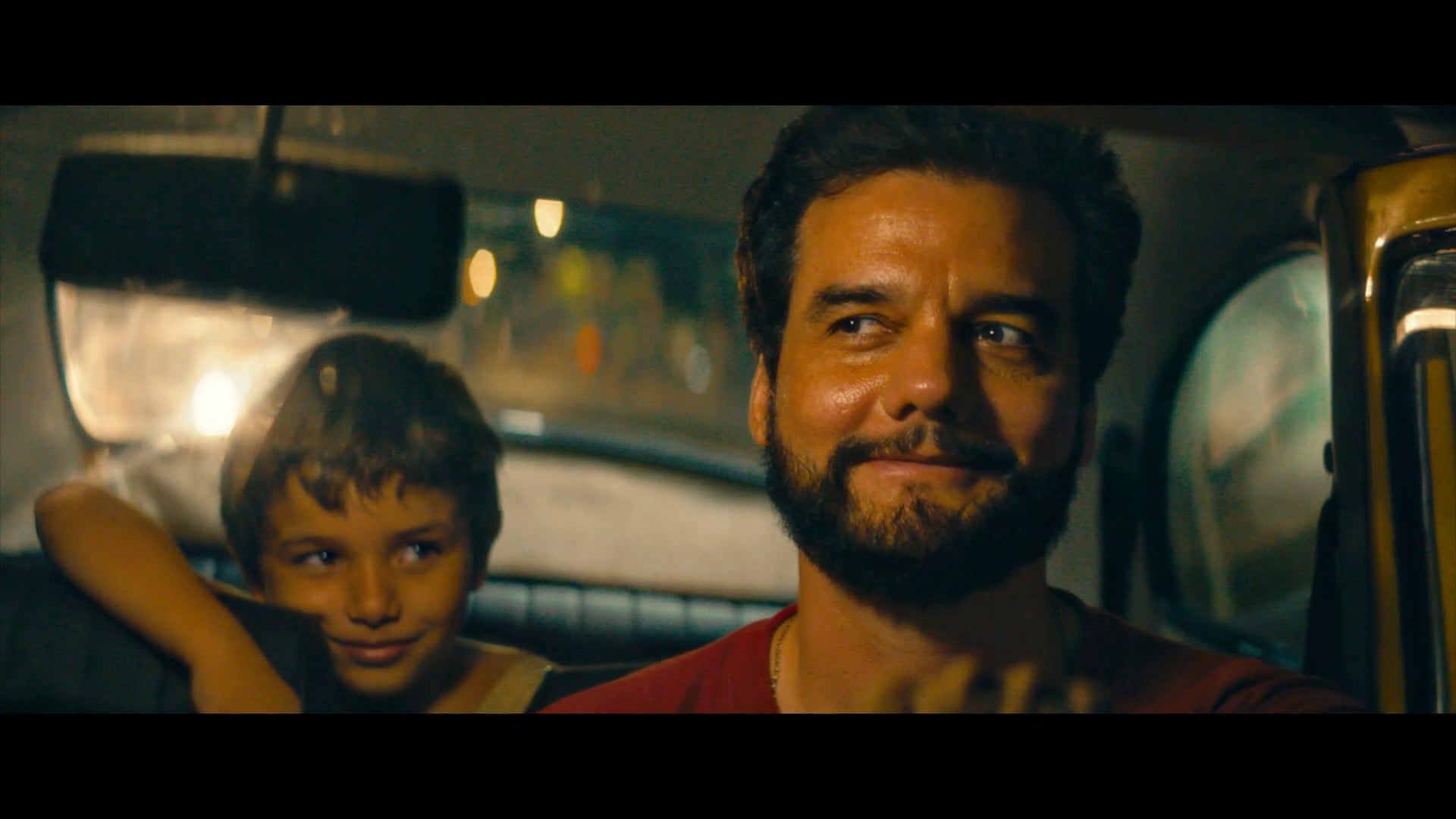
Recently, I watched a movie called The Secret Agent, and a subtle detail, almost unrelated to the main plot, caught my attention, and reminded me of this ‘present absence’. A child who’d lost their mother asks their father whether she’d return, to which the dad responds that no, she won’t, but she lives with them, when they remember her. A while later the child sends a letter to their father saying: I am almost forgetting my mum. Now, take this with a pinch of salt, since it is a very young child, but this confession seemed to me both like a desire and fear to forget, as well as an actual description of what was already happening. But in order to do it, the child had to remember their mother to actually write about her and their own experience of forgetfulness. Later, when interviewed by an academic working on the case of their parents, the child, now an adult, mentioned they would not make any comments on or talk about their parents. A right to forget. Despite it all, they kept the flash drive containing information of their parents, should they ever want to remember, on their own terms, in their own time.
In what the movie Eternal Sunshine frames as permanent forgetfulness, it doesn’t allow room for personal growth. Although there remains both pain and love [eternal sunshine] in those that forget, they lose the parameters against which to reflect and develop. Therefore, I am not defending the outcomes of permanent forgetting in the movie. What I do defend is temporary and conscious forgetfulness, if need be – and it might not be the case for all, of course. But I do want to offer my understanding to those that wholeheartedly wish to forget. I know you know you can’t. Not fully. But as you actively and temporarily try to forget – a person or a moment – you can create the necessary physical and emotional distance to the source of grief to strengthen yourself to face the unavoidable feelings you have temporarily made absent, but which have remained present. In the temporalities of closure, forgetting allows us to eventually face our painful memories when we are ready, and realise that, while painful moments will perhaps always remain painful, they no longer take centre stage in our lives.
Nosa essa parte do agente secreto me destruiu. Fiquei pensando nisso por um tempo ainda