
On Lying
Lying is (correctly) mostly seen on a negative lens. This essay will however be a defence of lying, or at least of some form of lying.

Around my pre-teen-to-teenage years, I was particularly obsessed with some fantasy books whose authors are British. This made me fantasise about the idea of Britain and my connection to it; I had a platonic love for Prince Harry, I once rooted for both England and Brazil in the World Cup; I used to constantly correct my English teacher when she used US English spelling and pronunciation. This made me create a different character of who I was at times; for instance, I used to change my surname for British ones for laughs in attendance sheets, to the point that I once was handed a course certificate with my inexistent British surname.
[Little did I know where I would be living now and how the reality of Britain would quickly debunk the magical fantasy I’d created]
We’ve all lied. And been lied to. Unless you’re a psychopath, lying has provoked in all of us similar feelings; of guilt, shame, regret, anger, frustration, disappointment, and so many others. There are lies that hurt, that we tell each other knowing its negative ripple effects and assume their risk anyways. This is not a defence of this type of lying. I do not want to even use this opportunity to make it relative, to say how it is dependent on several variables. If you need to talk about it, grab a few friends and go to the pub. Mine is a defence of another type of lying.
Ariano Suassuna, a Brazilian writer, was a convicted and confessed liar. In a hilarious conference, he says something we do not think about enough; those he calls ‘lyrical liars’, that lie for their love of art. He proceeds saying he’s ‘cultivating a liar’ in the Brazilian state of Pernambuco, a son of a beekeeper, who claims his dad is the greatest producer of honey in the state. Why? Because he managed to create a hybrid species from the mixing of bees and fireflies. In doing so, they produced honey during the whole day and night. He confesses: this is a lie, but it is a lie that should exist. So, since it doesn’t, we invent; and that is the role of the writer – to lie.
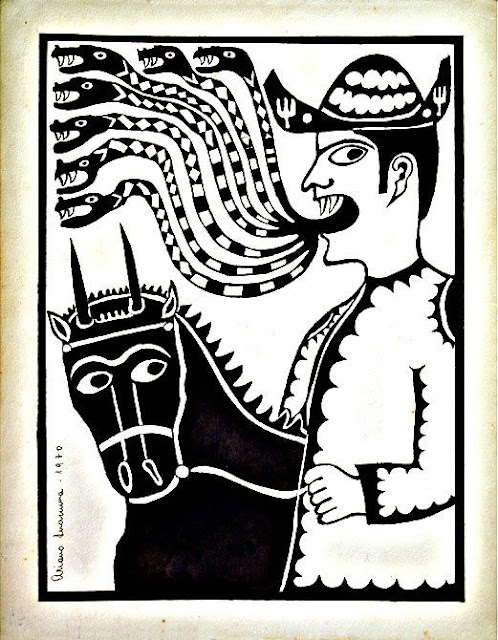
Fantasy books, Sci-Fi movies, animated stories, are all, from this perspective, lies. So are drag queen characters. We channel them into creating worlds and persons not only to imagine new life possibilities and entertain us, but also to make us feel better and stronger, to make us understand the grey landscape of moral life choices, or even to spark utopian thinking in a world full of chaos, violence, and hopelessness.
If applied in the everyday, Suassuna mentions how close it feels to Brazilian social culture. When a Brazilian says they will attend an event, that actually means there’s a 50% change they go and 50% they won’t. But if they answer ‘I will do my best to attend’, this surely means they won’t go. He follows with his own story, about being unable to respond to all letters he receives, and mentions some people ask whether he’s received them. To which he answers ‘yes, and I have replied’ - a lie. And the person knows it’s a lie. Suassuna knows they know he’s lying, and they also know he knows they know. But, since they’re both Brazilians, they accept the lie, and understand its underlying (no pun intended) meaning: ‘I did not answer your letter, but I really like you’. My country, a place of lyrical liars? Maybe that’s why I don’t really like such direct social cultures, like the case of the Dutch. There’s a lyricism in lying in these contexts that come from a place of collective and interpersonal care that I particularly like. Or perhaps I can understand better since this is how I’ve been socialised.
Children are innate and unapologetic lyrical liars, like in my story in the beginning of this essay. Or when my niece changes clothes several times a day as she creates different characters she will then become. She also carries a school backpack everywhere, and even sleeps with it, surely based on a lie. She’s not old enough to go to school, but wants to have a slice of her sisters’ life. So, she forges a lie and experiences it acutely. Recently, my sister asked her what she wants to become when she grows up, to which she replied: ‘an adult’. I’d recommend changing her mind.
Don’t get me wrong, I actually like being an adult and having more agency over my own life, which children don’t. I, too, used to fantasise about life as an adult. All children do; and sometimes, as they do it, they may create worlds wherein their social class is another, they’re respected, they have what they believe is a ‘complete’ family, they love their jobs. As children, jobs that are not traditionally socially recognised by adults are the source of intense creativity. I once created a character called Atendimento (Portuguese noun referring to receptionist services), a receptionist that was exploited by her boss. My cousins, friends and I would change roles at times; I think we all rooted for Atendimento, but she hardly ever won.
As we become adults, however, we stop doing that, or at least massively reduce it. Reality is all too real and, in many cases, overwhelmingly negative. It is no wonder that in my country of lyrical liars, one of the most expected social events is Carnival, one of the most important instances where adults have an opportunity to invent, or to lie. They put costumes on, pretend they’re someone else, play with gender fluidity, laugh, dance, and drink on the streets with others, and even sing about political issues whilst inebriated from the joys of this shared collective experience.
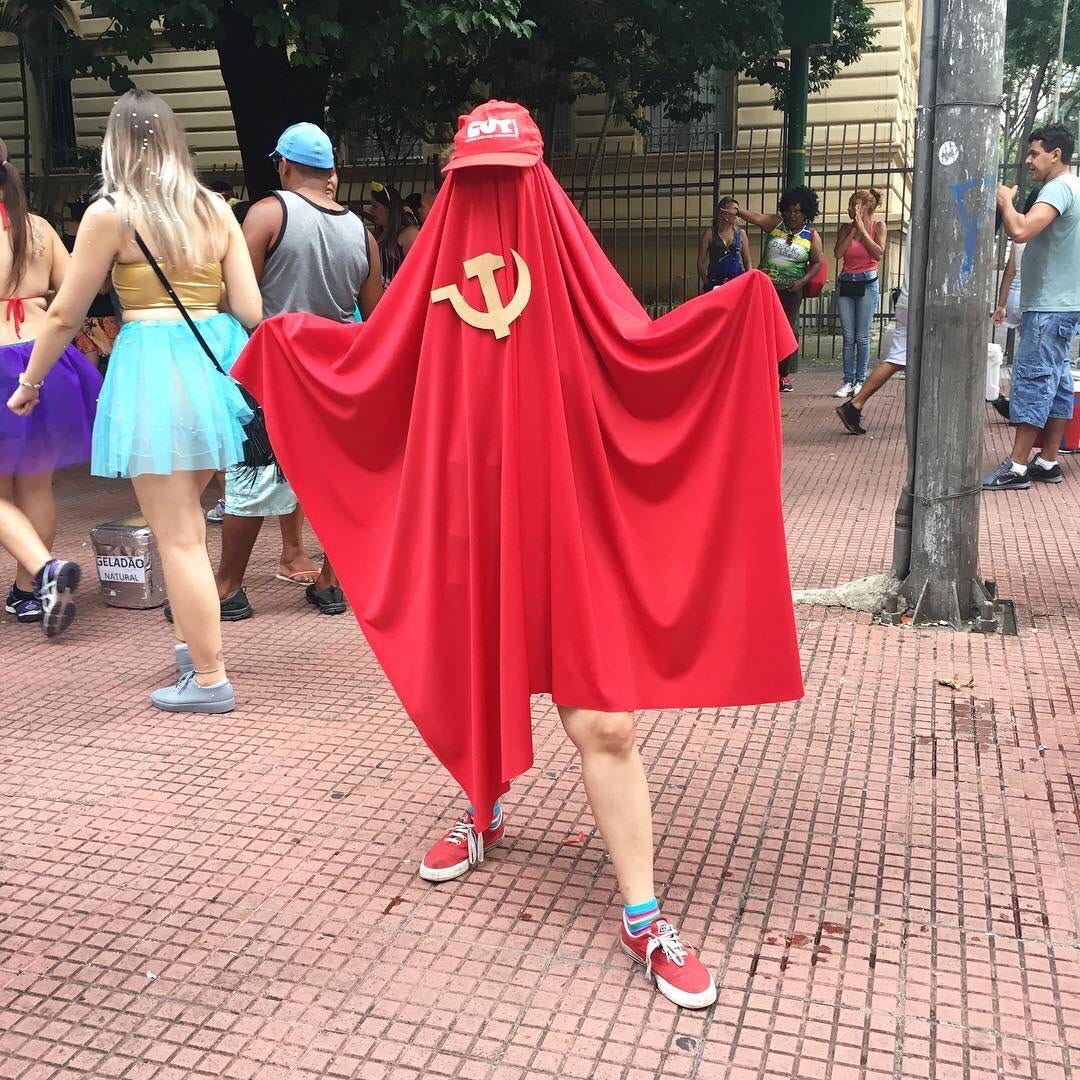
Lyrical lying therefore becomes essential, personally and politically speaking. Rachmiel Brandwain writes in Militant Utopia that utopian thinking, even if inherently unattainable, is necessary ‘to rebuild society precisely because they believe in the possibility of happiness on earth’. She goes on to say that ‘that our virtues and flaws depend on the construction of society’, opening avenues for us to imagine, even if via lyrical lies, a complete different reality. Indeed, I agree with Piotr Zuk that without imagining yet inexistent possibilities of different (utopian) world orders, there is no political theory. Even if in many cases it did not play out as they’d dreamt, demonstrators in the Arab Spring surely imagined new possibilities; I fully believe collective utopian thinking also sparked current demonstrations in Iran. It is no coincidence how authoritarian regimes have historically targeted the arts; or, in other words, the professional liars.
I want to finish this essay by giving an ode to the biggest liars of all, Suassuna. To him, culture made sense if it had to roots, accent, and invention. As I have migrated to the UK as an adult, that place once part of my childhood inventions, and seen its reality, I try to do the opposite. I highlight my roots and my accent in my everyday and in doing that, I invent. About my country, my home, I romanticise it. Even if part of it is untrue, I do it because it helps me navigate my experience of unbelonging and the bittersweetness of my everlasting saudade. And to do that, I lie.
Você é uma grande ( mentira?) mentirosa!!